
Curtain Pleat & Header Styles: A Visual Guide
All ten curtain headers we sew — pinch and euro pleats, grommet, back tab, rod pocket, tab top, ripple fold and flat panel — with photos, fullness and the room each one suits.
By The Jenua Workroom · Updated September 29, 2026 · 11 min read
On this page
- All ten headers at a glance
- Pleated headers
- Pinch pleat vs. euro pleat
- Double vs. triple
- Fullness on pleated headers
- Rod headers
- Grommet
- Back tab
- Rod pocket
- Tab top
- Track and flat headers
- Ripple fold
- Flat panel
- Fullness by header
- The headers side by side
- Matching header to fabric, quickly
- Headers and decor eras: fast pattern-matching
- One worked decision
- Changing your mind later
The header — the top few inches of a curtain — decides how the whole panel behaves: how it folds, how it slides, how formal it reads, and how much fabric it takes. Made-to-measure means you choose it deliberately. Here are all ten headers we sew, photographed the same way so you can compare them, with the practical differences catalog photos don't show.
All ten headers at a glance
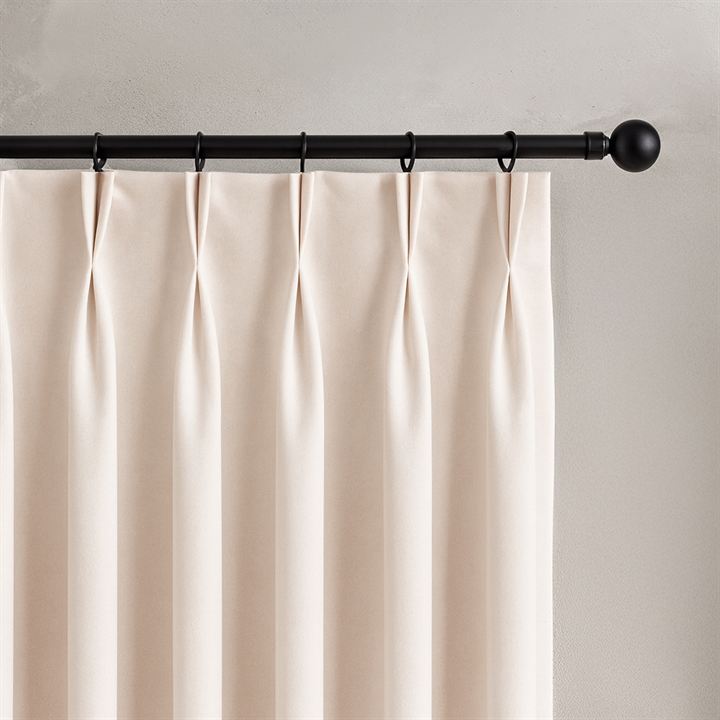 Pinch Pleat — Double
 Pinch Pleat — Triple
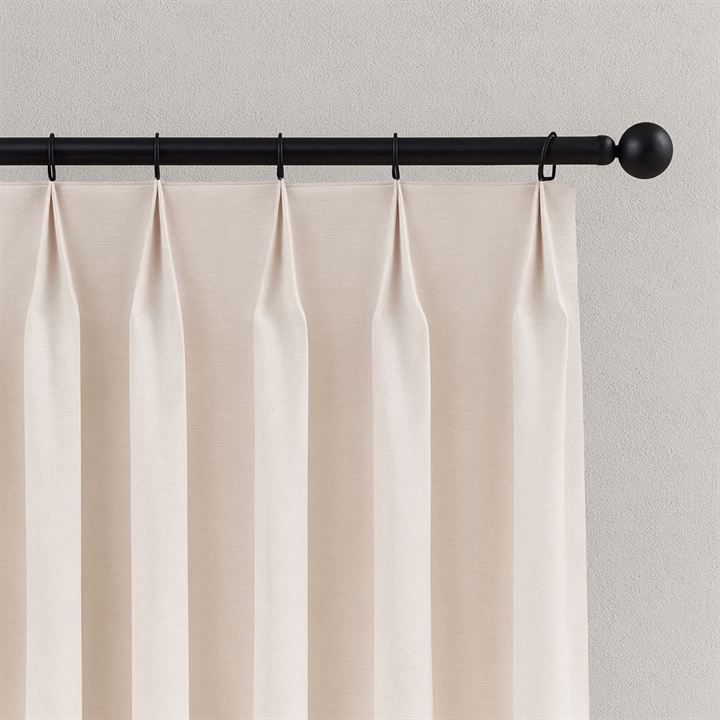 Euro Pleat — Double
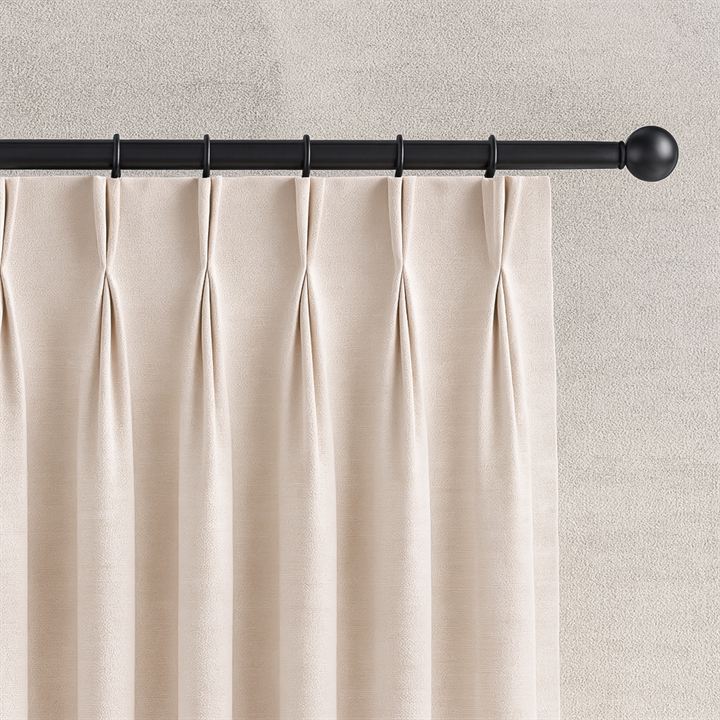 Euro Pleat — Triple
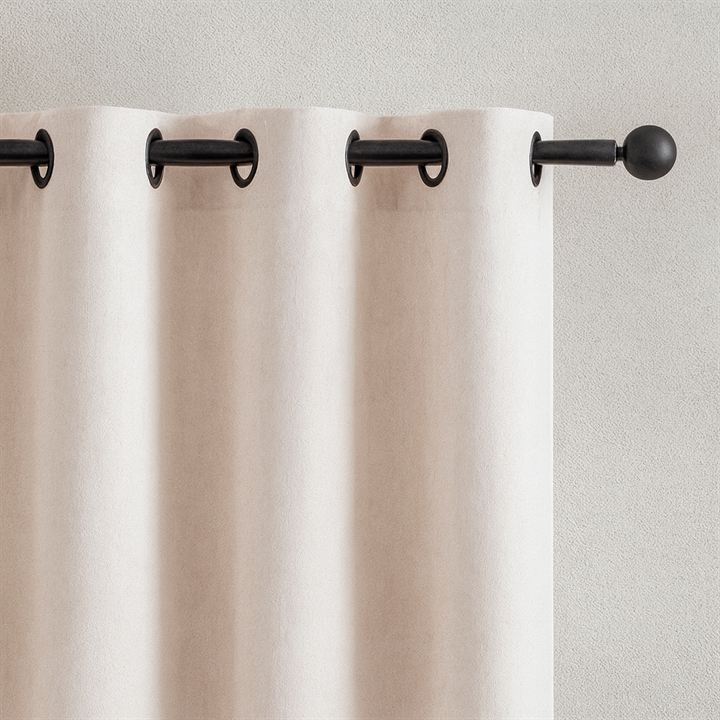 Grommet
 Back Tab
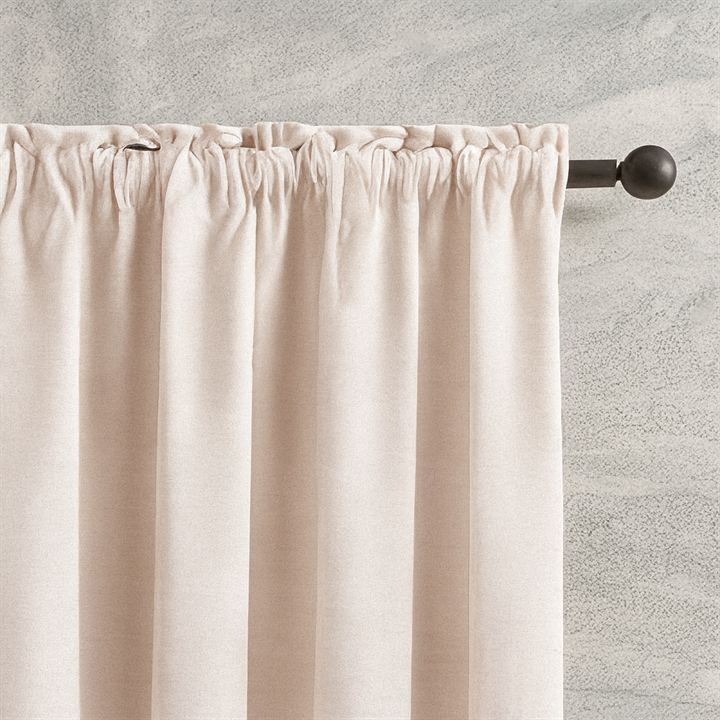 Rod Pocket
 Tab Top
 Ripple Fold
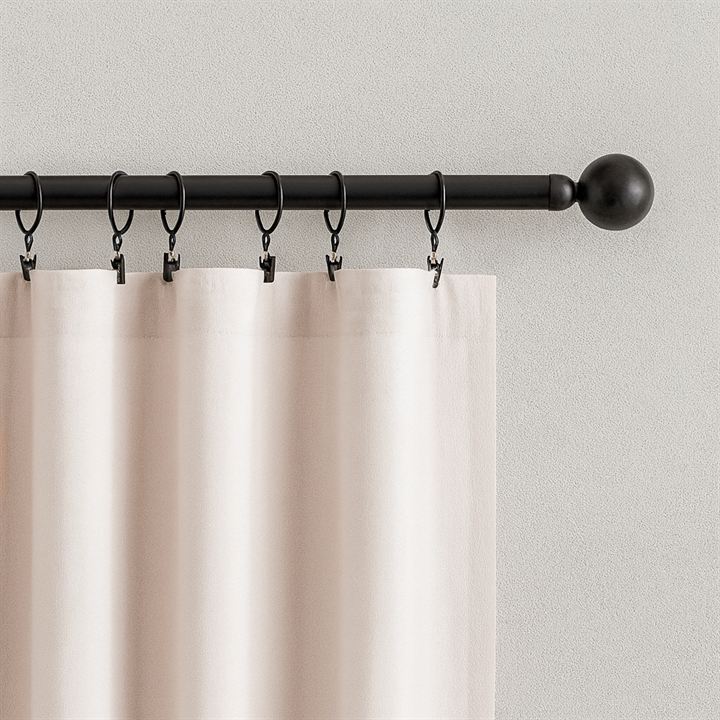 Flat Panel
They fall into three families: pleated headers, sewn into permanent folds; rod headers, which hang straight from a rod; and track and flat headers, for tracks, clips and your own hardware.
Pleated headers
Fabric gathered and sewn into permanent, structured pleats that fall in disciplined columns. This is the header of drapery workrooms and decorator projects — the one that makes made-to-measure look visibly different from off-the-shelf.
Choose them when the room leans formal (dining rooms, studies, traditional living rooms), when you're hanging velvet — pleats organize its weight beautifully — or when panels hang from a ceiling track, where grommets and rod pockets can't go.
Pinch pleat vs. euro pleat
The difference is where each pleat is tacked.
Pinch pleat: stitched a little lower, so each pleat is pinched at its middle and opens above and below the stitch.Euro pleat: caught right at the top edge, so the folds fan open straight from the header.Pinch pleat is the classic: the pinched waist gives each pleat a little "bow-tie" shape at the top, and the look is tailored and traditional. Euro pleat — sometimes called a top-tacked pleat — has no visible waist, so the line is cleaner and more modern. If your room is traditional, pinch; if it's contemporary but you still want structure, euro.
Double vs. triple
Both pinch and euro pleats come in double (two folds per pleat) and triple (three).
Double: two folds per pleat — softer and a little more relaxed.Triple: three smaller folds per pleat — crisper and more formal.Triple pleats pack the same fabric into more, smaller folds, so each pleat stands up more crisply — the choice for formal rooms and heavier fabrics. Double reads softer and suits linen and lighter weights.
Fullness on pleated headers
Pleats only show their character with more than 2× fabric. We sew every pleated header at 2.5× as standard, for a fuller, more luxurious fall — so there's no fullness to choose on the product page. Want to go further, say 3×? Get in touch and we'll make it.
Practical note: pleated panels hang from small hooks into rings or gliders. We sew the hook pockets and include placement guidance; installation is five minutes per panel.
Rod headers
Grommet
Metal-ringed eyelets punched through the header, threading straight onto the rod. The rings force the fabric into deep, even S-shaped waves that hold their rhythm along the full width — the "architectural" look in most contemporary interior photography.
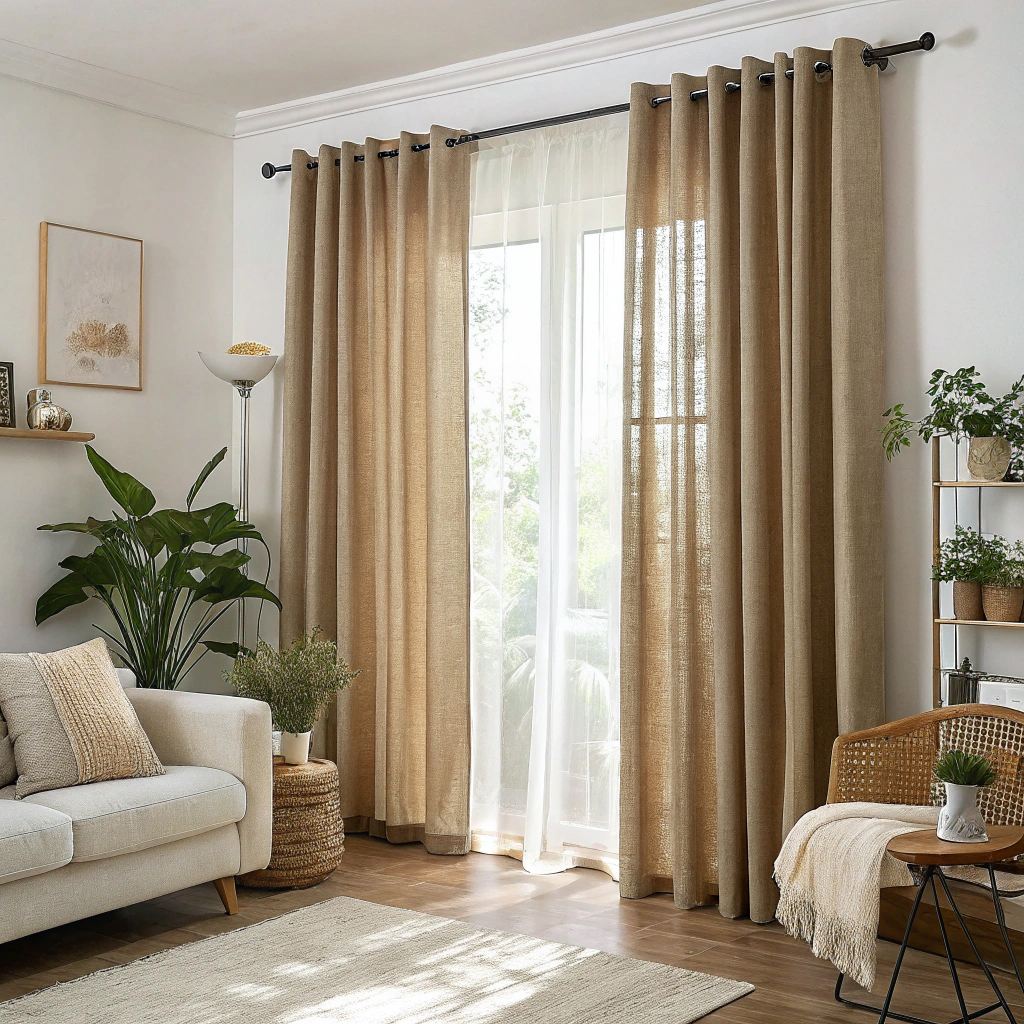
Choose it when the room is modern or transitional, the curtains get opened and closed daily, and your rod is worth seeing (grommets expose it fully). It's the best-behaved header for heavy daily use: nothing snags, nothing needs dressing after you close it.
Skip it when your hardware is a return rod or track (grommets can't turn a corner), or the room is genuinely traditional — grommets in a Victorian parlor read like sneakers with black tie. Note the geometry too: grommet panels hang about an inch above the rod's centerline, and the rod is always visible through the waves.
Fullness: 2× is ideal; choose 2.5× for a fuller look.
Back tab
Fabric loops sewn to the back of the header, so the front face stays completely clean and the rod stays hidden. Panels fall in soft columns — less sculpted than a pleat, less rhythmic than grommet, more orderly than rod pocket.
Choose it when you want minimalism (no visible hardware at all), a relaxed-but-intentional look in linen, or a header that works across many rooms of one home.
Skip it when the window is your main source of daily light and you're impatient — the hidden tabs glide acceptably but not effortlessly. And skip it for very heavy panels; concentrated weight on fabric loops eventually tells.
Fullness: 1×, 1.5× or 2× — 2× gives the fullest columns.
Rod pocket
A sewn channel along the top that the rod threads through, shirring the fabric into a soft, gathered ruffle. It hides the rod completely and is the simplest construction of all.

Choose it when the panels are decorative or rarely moved — flanking a picture window, dressing a nursery, or carrying sheers, where the gathered header disappears into the fabric's own softness. Cottage, farmhouse and romantic schemes are its home turf.
Skip it when you'll open and close the curtains daily. Fabric dragging directly on a rod is genuinely annoying in daily use — the trade-off catalog photos never mention. It also gathers unpredictably in heavy fabrics; we don't recommend rod pocket for velvet at all.
Fullness: 1.5×, 2× or 2.5× — the gathering loves fabric, so sheers look best at 2.5×.
Tab top
Visible fabric loops sewn along the top edge, slipped straight over the rod. The rod shows between the tabs, and the panel falls in relaxed, casual folds.
Choose it when the room is informal — cottages, kids' rooms, porches, boho linen schemes — and you like seeing the hardware as part of the look.
Skip it when the curtains move every day: tabs grip the rod and slide less freely than grommets. It's also the least formal header after rod pocket.
Fullness: 1×, 1.5× or 2×.
Track and flat headers
Ripple fold
Continuous, even S-shaped waves that hang from gliders on a ceiling or wall track. Every wave is the same depth, so the curtain looks identical open or closed — the hotel and modern-architecture look.
Choose it when you have (or want) a track, the room is contemporary, and you'd like curtains that stack neatly and glide with a fingertip — floor-to-ceiling windows and sliding doors especially.
Skip it when you want to show off a decorative rod: ripple fold needs a track.
Fullness: 2× or 2.5×.
Flat panel
No header structure at all — a clean, flat top for clip rings, a track with hooks, or your own hardware.
Choose it when you already have clip rings you love, you want the simplest possible top, or you're hanging from something unusual.
Skip it when you want the curtain to hold a shape on its own — without a structured header, the folds depend entirely on how you space the clips.
Fullness: 1×, 1.5× or 2×.
Fullness by header
Fullness is how much fabric goes across your rod — 2× means twice the rod width. Here's what each header offers:
| Header | Fullness | Our note |
|---|---|---|
| Pinch & euro pleat | 2.5× (standard) | Pleats need more than 2×; we sew 2.5× for a luxurious fall. More on request. |
| Grommet | 2× or 2.5× | 2× is ideal; 2.5× for a fuller look. |
| Rod pocket | 1.5×, 2× or 2.5× | Sheers look best at 2.5×. |
| Back tab, tab top, flat panel | 1×, 1.5× or 2× | 2× for the fullest folds. |
| Ripple fold | 2× or 2.5× |

Need a fullness we don't list, or something else custom? Contact us — our workroom can usually make it.
The headers side by side
| Grommet | Back Tab | Rod Pocket | Tab Top | |
|---|---|---|---|---|
| Look | Modern, even S-waves | Clean face, casual columns | Soft, gathered, cottage | Relaxed, visible loops |
| Glide | Effortless | Moderate | Draggy | Moderate |
| Best fabrics | Linen, blackout | Linen, sheers | Sheers, light linen | Linen, cotton-look |
| Hardware | Exposed rod | Any rod (hidden) | Any rod (hidden) | Exposed rod |
| Formality | Contemporary | Relaxed middle | Least formal | Casual |
| Pinch Pleat | Euro Pleat | Ripple Fold | Flat Panel | |
|---|---|---|---|---|
| Look | Tailored, classic columns | Clean, modern columns | Even hotel-style waves | Plain top, shape set by clips |
| Glide | Smooth (rings or gliders) | Smooth (rings or gliders) | Effortless (track) | Depends on clips |
| Best fabrics | Velvet, linen, blackout | Linen, blackout, velvet | Linen, sheers, blackout | Any |
| Hardware | Rings + hooks, or track | Rings + hooks, or track | Track | Clip rings or hooks |
| Formality | Most formal | Formal, modern | Contemporary | Neutral |
Matching header to fabric, quickly
- Linen → back tab or grommet for casual rooms; pinch or euro pleat when linen goes formal.
- Sheer → rod pocket (stationary), back tab (operated) or ripple fold on a track. Grommets look industrial in gauze.
- Blackout → grommet for bedrooms you open daily; a pleat on a wraparound track for maximum edge-sealing (see the fabric guide on light leaks).
- Velvet → pinch pleat, full stop — or grommet in loft-like spaces. Rod pocket and tab top don't handle the weight well.
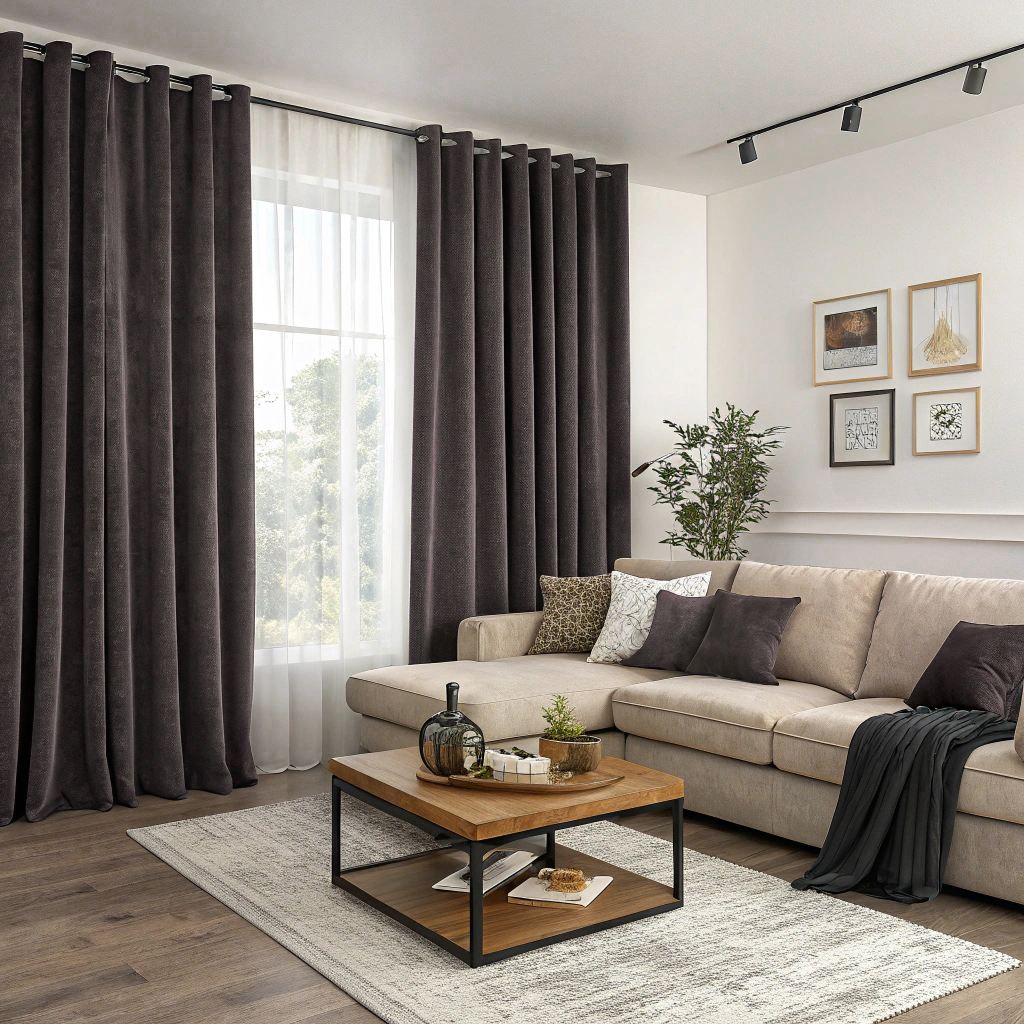 Grommet velvet in a modern living room.
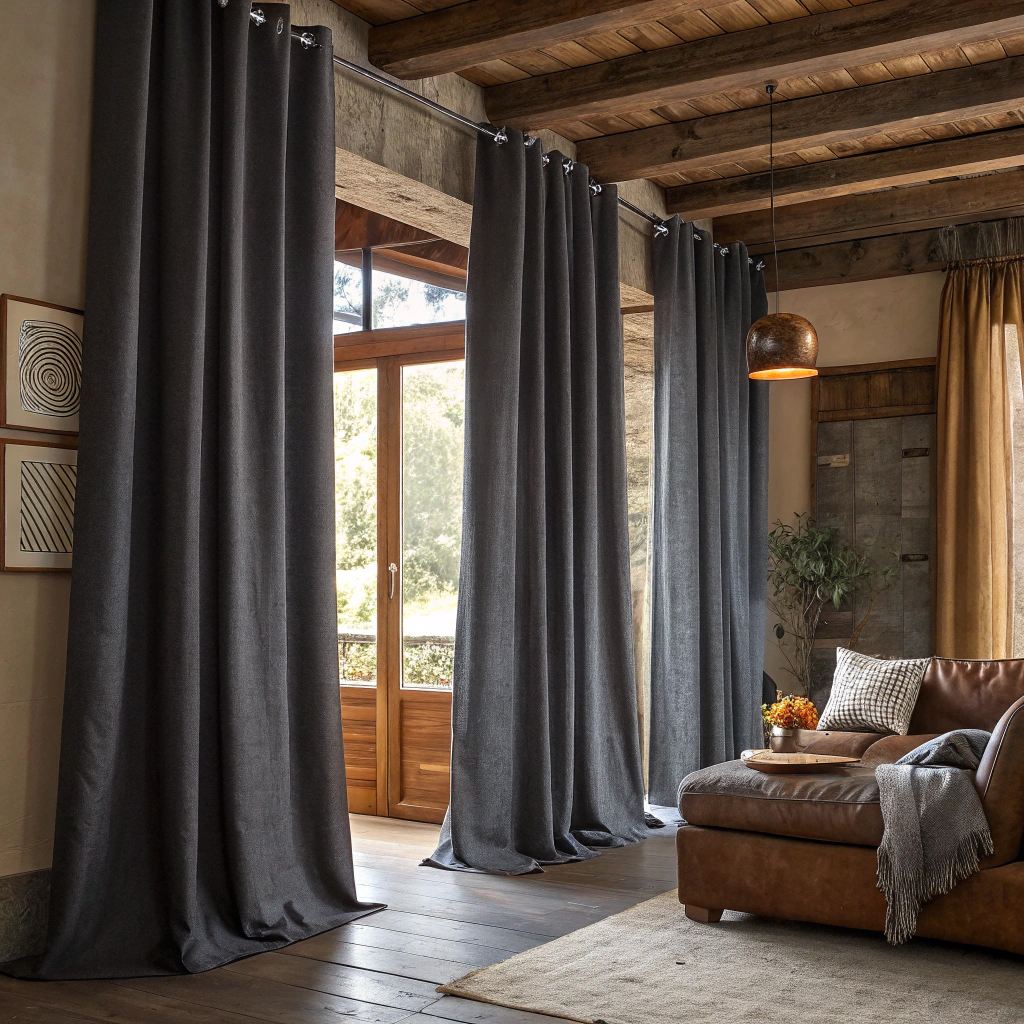 Grommet velvet suits a loft's exposed beams.
Headers and decor eras: fast pattern-matching
If you're styling a whole home and want the shortcut version: mid-century and Scandinavian rooms want back tab, grommet or ripple fold — hardware minimal, folds soft, nothing ornamental. Modern farmhouse handles rod pocket sheers in bedrooms and back-tab linen in living spaces without breaking character. Traditional, colonial and Georgian-leaning rooms are pinch pleat territory, ideally on rings over a wood or bronze rod; contemporary rooms that still want tailoring take euro pleat. Industrial lofts are where grommet velvet works — the hardware's frankness suits exposed brick and steel. And transitional rooms (most American rooms, honestly) can carry any header except rod pocket in a formal fabric; when nothing else decides it, back tab is the style-neutral answer that won't fight a future furniture change.
One more compatibility note that saves returns: check your rod diameter before ordering grommets. Our grommets fit rods up to 1⅜ inches; chunky decorative rods over that need back tab, tab top, or rings instead. It's the most common hardware mismatch we see, and a ten-second measurement prevents it.
One worked decision
Say it's a south-facing living room with a 90-inch rod, mid-weight linen, and curtains opened every morning. Grommet or back tab?
Daily operation says grommet. The rod decides the rest: if it's a plain builder's tube not worth showing, choose back tab, which hides it, at 2× fullness — enter the 90-inch rod width, pick a split pair, and the configurator applies the fullness for you (the measuring guide covers the rest). If it's a handsome iron rod with finials, grommet wins.
Changing your mind later
Headers aren't equally reversible, which is worth knowing before you commit. Back tab converts to a pleated look anytime by adding clip rings or drapery hooks — it's the most future-proof header we sew, with flat panel close behind. Rod pocket panels can also be clipped to rings, gaining glide overnight. Grommets, though, are punched through the fabric permanently, and pleats are sewn structure: neither can become anything else. If you're furnishing a home you expect to restyle within a few years, weight your choices toward the convertible ones.
That's the pattern for most header decisions: operation frequency first, hardware honesty second, formality third. Choose in that order and you'll rarely go wrong — and if you're stuck between two, our free design service will make the call from a photo of your room. Every header on this page is available on every fabric in the configurator.
Frequently Asked Questions
What is the difference between pinch pleat and euro pleat?
Where the pleat is tacked. A euro pleat is caught right at the top edge of the curtain, so the folds fan open straight from the header — a cleaner, more modern line. A pinch pleat is stitched a little lower, so each pleat is pinched at its middle and opens above and below the stitch — the classic tailored look. Both come in double (two folds) and triple (three folds).
What is the most popular curtain header style?
Grommet is the most requested header for its clean look and effortless glide. Pinch pleat is the classic choice wherever a room leans traditional or formal, and back tab is the quiet favorite for relaxed linen rooms.
Which curtain header is easiest to open and close?
Grommet, by a wide margin. The metal rings slide directly on the rod with almost no friction. Pleated headers on rings or gliders come second, and ripple fold on a track glides beautifully too. Rod pocket is the hardest to operate — fabric drags on the rod — so reserve it for panels that stay put.
Do pinch pleat curtains need special hooks or rings?
Yes — pinch and euro pleats hang from drapery hooks inserted into the back of each pleat, which then clip to rings or a track glider. We sew the hook pockets in and include placement guidance, so it's a five-minute job per panel, not a project.
Can I use grommet curtains on a track instead of a rod?
No — grommets need a rod to thread onto. For tracks, choose ripple fold (made for them), pinch or euro pleat on hooks into gliders, or flat panel with clips. If you already have a track, tell our design service and we'll confirm the right header before you order.
How much fullness does each header need?
Pleats only show their character with more than 2× fabric, so we sew every pleated header at 2.5× as standard — and can go fuller, say 3×, on request. For grommet, 2× is ideal, with 2.5× for a fuller look. Back tab, tab top and flat panel come in 1×, 1.5× and 2×; rod pocket in 1.5×, 2× and 2.5×; ripple fold in 2× and 2.5×.
Keep Exploring
- Linen CurtainsBreathable, softly textured linen that filters light beautifully and drapes with ease.
- Velvet CurtainsRich, weighty velvet that insulates, quiets a room, and reads unmistakably luxe.
- White Linen Curtains, Made to Measure
- Emerald Velvet Curtains, Made to Measure
- Curtain Hanging Styles: Height, Width & Hardware Done RightWhere to mount the rod, how far to extend it, inside vs. outside mounts, and the…
- Layering Curtains: Style Meets FunctionHow to layer sheers with drapes — double rods, fabric pairings, and light contro…
- Curtains vs. Drapes vs. BlindsAn honest comparison of curtains, drapes, blinds, and shades — cost, light contr…