
Curtain Fabric Guide: Linen, Velvet, Blackout, Sheer & Semi-Sheer
How linen, velvet, blackout, sheer and semi-sheer curtains actually behave — light, privacy, drape, insulation, care — and which fabric fits which room.
By The Jenua Workroom · Updated September 30, 2026 · 8 min read
Fabric is the single decision that most changes how a curtain performs — more than color, more than header style, more than hardware. The same window can feel airy, cocooned, or theatrical depending on what's hanging in it. Here's how our five fabric families actually behave, where each one wins, and — just as useful — where each one is the wrong call.
The five families at a glance
| Linen | Velvet | Blackout | Sheer | Semi-Sheer | |
|---|---|---|---|---|---|
| Light | Softens & filters | Blocks most, absorbs the rest | Blocks (fabric-level) | Diffuses, maximum daylight | Filters ~15–20%, softly |
| Privacy | Good at night with lining | Complete | Complete | Daytime only | Daytime, softer at night |
| Drape | Relaxed, organic folds | Heavy, sculptural | Structured, smooth | Weightless, billowy | Light, fluid |
| Insulation | Moderate | Best | Good | Minimal | Light |
| Sound | Slight softening | Noticeably quieter rooms | Moderate | Negligible | Slight |
| Care | Machine-washable, relaxed wrinkles | Brush/vacuum, blot spills | Easy, wrinkle-resistant | Easy, quick-drying | Easy, quick-drying |
Linen: the default for a reason
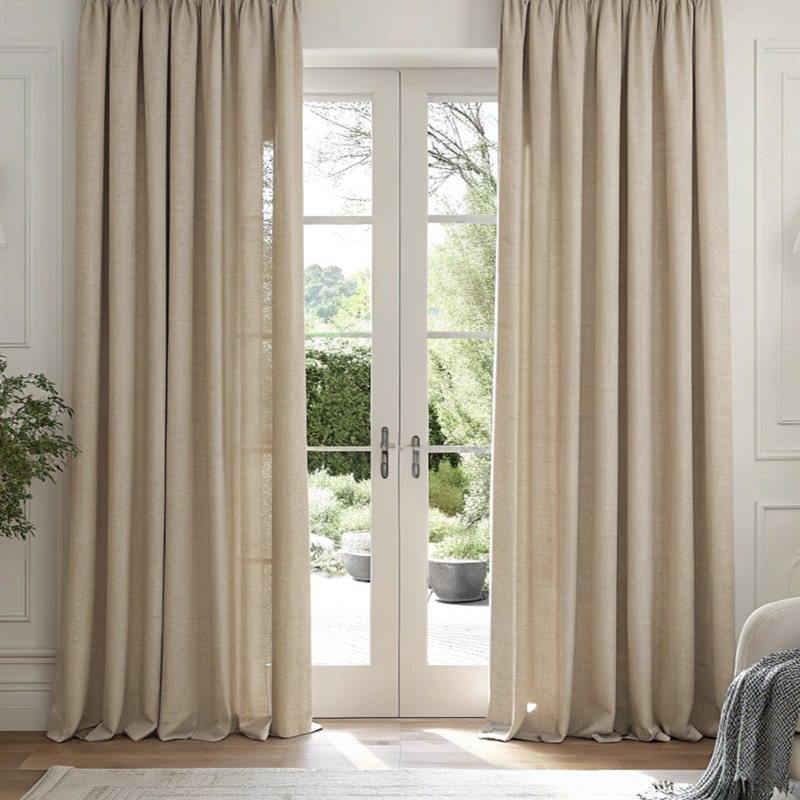 Linen filters daylight into a soft glow.
 Natural slubs give linen its texture.
Linen turns hard daylight into the soft, dimensional glow that makes rooms photograph well and feel calm. It has natural slubs — little irregularities in the yarn — that give it texture no synthetic quite replicates, and it hangs in relaxed folds that look effortless rather than staged.
Where it wins: living rooms, dining rooms, home offices, any space where the goal is warmth and light rather than darkness. It suits both casual back-tab headers and formal pinch pleats, which is rare.
Where it's wrong: don't choose unlined linen for a bedroom if you're light-sensitive — it filters light, it doesn't stop it. Streetlight and sunrise come through. And in a persistently damp bathroom, linen's absorbency works against you.
The honest trade-off: linen wrinkles. A relaxed, lived-in crease is part of its character, and a steamer erases anything beyond that in minutes — but if the sight of a soft crease will bother you, look at blackout's smoother face instead.
A note on weight: our linen runs around 200 gsm — heavy enough to fall straight and resist billowing over a vent, light enough to fold generously at 2× fullness. Fullness is yours to choose, from 1× up to 3× (more on fullness in the measuring guide and the header style guide).
Velvet: weight, warmth, and quiet
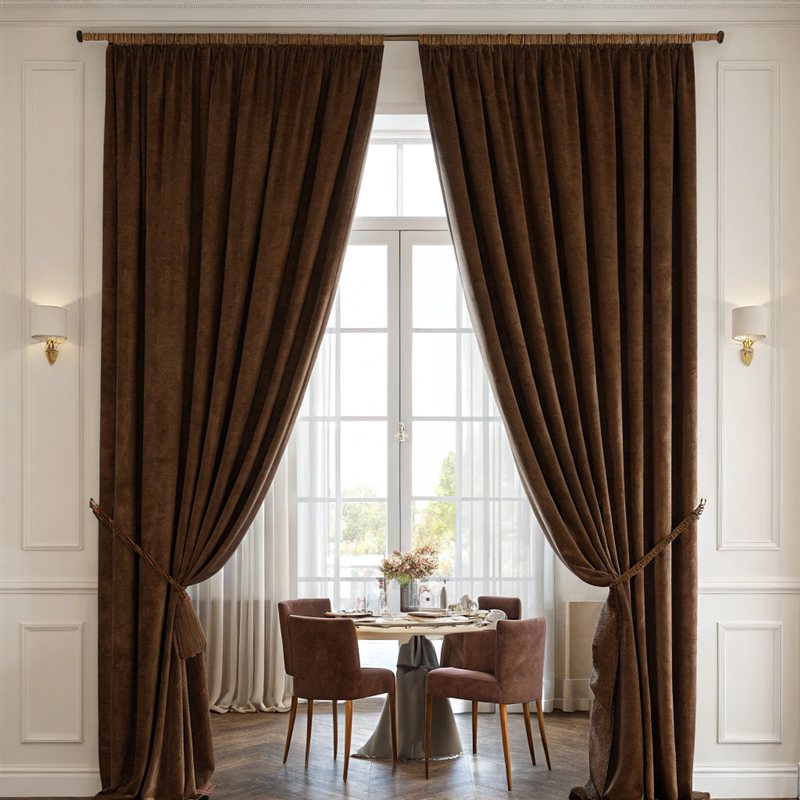 Deep, slow folds that make ceilings look higher.
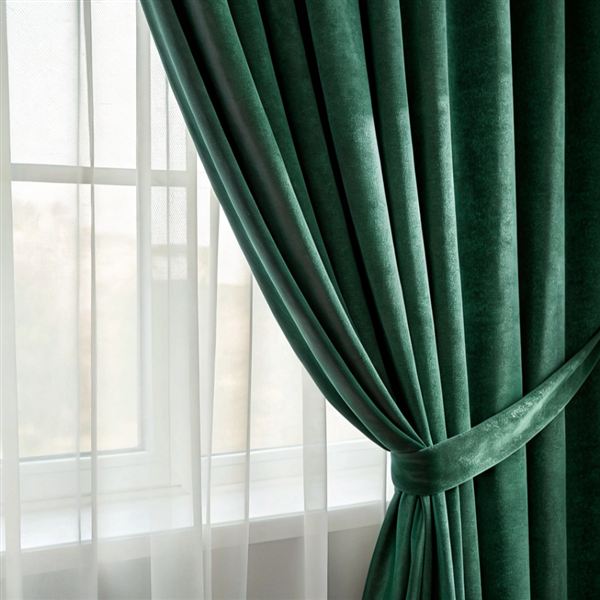 The pile catches light — jewel tones shine.
Velvet is the maximalist of the five — a dense pile that absorbs light and sound, insulates better than anything else on this list, and falls in deep, slow folds that make ceilings look higher. Rooms with velvet curtains are audibly softer; conversations stop bouncing.
Where it wins: formal living rooms and dining rooms, drafty older homes with single glazing, media rooms, and bedrooms that want hotel-suite gravity. Jewel tones — emerald, navy, burgundy — show velvet's light-catching pile at its best.
Where it's wrong: small, low-ceilinged, or already-dark rooms, where its visual weight compresses the space. Humid bathrooms and kitchens, where the pile holds moisture and odors. And breezy, casual coastal schemes — velvet always reads deliberate and dressed.
The honest trade-off: cost and commitment. Velvet is our heaviest fabric per panel and its saturated colors anchor a room's palette. Order swatches first and live with them for a week — velvet's color shifts dramatically between morning and lamplight, more than any other fabric we sew.
Blackout: engineered for sleep
 Bedroom-grade darkness that still reads like a normal curtain.
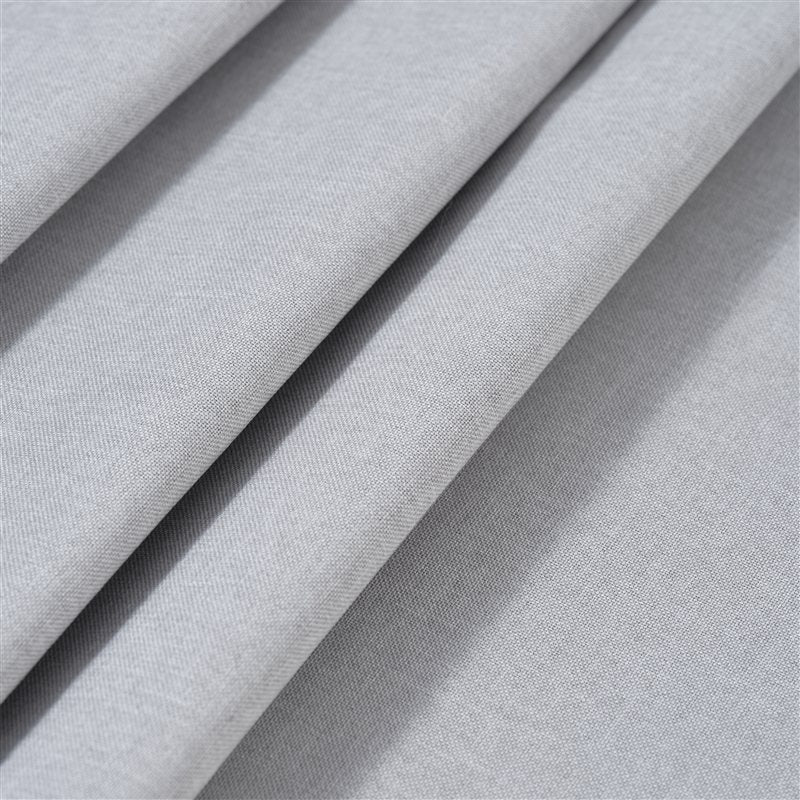 A dense, smooth weave stops light at the fabric.
"Blackout" describes function, not looks: a tightly woven or coated construction that stops light at the fabric itself. Modern blackout drapes read like a normal, smooth mid-weight curtain — the days of vinyl-backed hotel drapery are over.
Where it wins: bedrooms (especially east-facing), nurseries and kids' rooms, home theaters, and shift-workers' apartments. It also carries real side benefits: the dense weave cuts noise meaningfully and insulates well in both directions — warmer winters, cooler summers.
Where it's wrong: as the only treatment in a daytime living space. A living room behind closed blackout at 2 p.m. is a cave, and leaving them permanently open wastes what you paid for. If a room needs both daylight control and full darkness, layer: sheer inner + blackout outer, or choose linen with a blackout lining — linen's face, blackout's function.
Sheer: light as the whole point
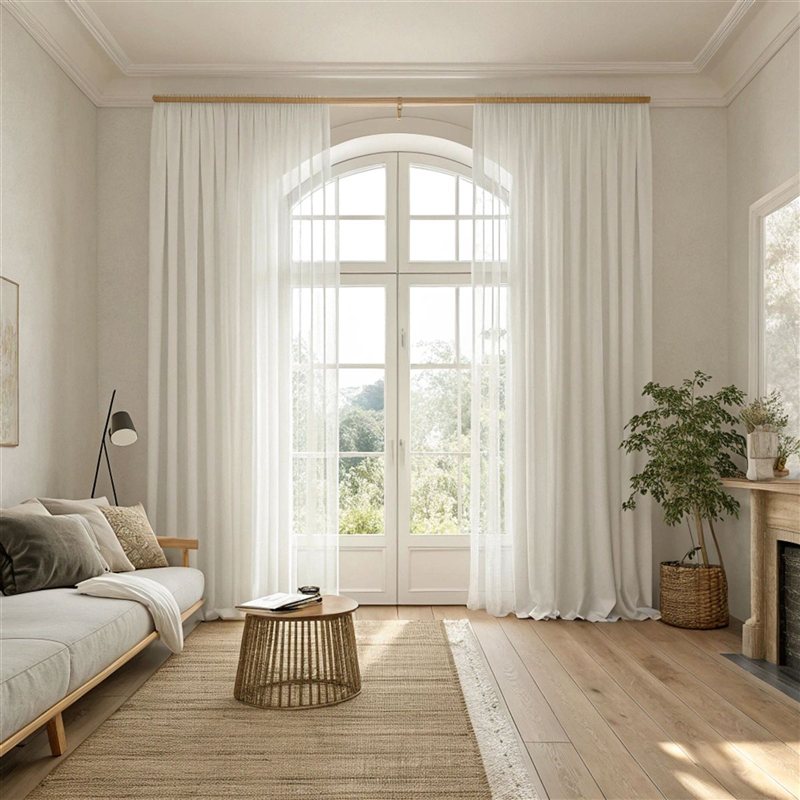 A wall of sheers: the cheapest architectural upgrade.
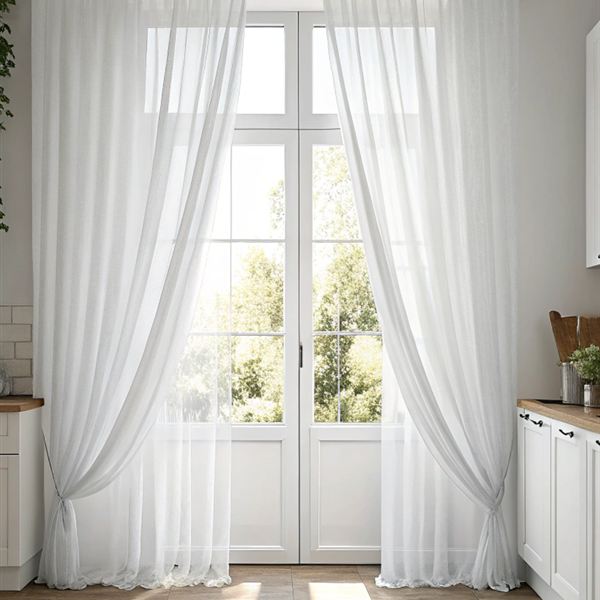 Daytime privacy without losing the light.
Sheers are for rooms where daylight is the feature. They blur the view from outside during the day, soften glare, and move with air from an open window in a way heavier fabrics never do. A wall of floor-to-ceiling sheers is the cheapest architectural upgrade available to most rooms.
Where they win: living spaces with dull views that need softening, street-facing windows that need daytime privacy without darkness, and as the inner layer of a layered treatment — sheer for day, drape for night.
Where they're wrong: sheers alone provide no nighttime privacy — with interior lights on, the transparency reverses and your room becomes the view. They also do almost nothing for insulation or sleep. Any bedroom, any street-facing room you use after dark: layer them or skip them.
Fullness matters double here. A sheer at 1.5× fullness looks like a mistake; at 2×–2.5× it looks like a design decision. Because the fabric is light and inexpensive per square foot, generous fullness is cheap — take it.
Semi-sheer: the in-between
Semi-sheer sits between a sheer and a full drape: a slightly denser weave that filters around 15–20% of the light. Rooms stay bright, but the fabric reads as a curtain rather than a veil — more color, more body, and more privacy than a sheer while still glowing when the sun is behind it.
Where it wins: living rooms and dining rooms that want daylight and a finished look, street-facing windows where a sheer feels too exposed, and as a single-layer answer in rooms where a sheer-plus-drape layer would be too much.
Where it's wrong: bedrooms for light sleepers and any room where you need real darkness — it softens light, it doesn't stop it. At night with lights on, you'll see shapes through it; add a heavier layer or a blackout option where that matters.
Fullness: like sheers, semi-sheers look best generous — 2× or 2.5×.
Linings change the math
Any main fabric can be ordered unlined, with a white lining, or with a blackout lining — and the lining often matters more than the fabric choice:
- Unlined keeps maximum texture and translucency. Right for sheers (always) and linen in daytime rooms.
- White lining — often called a privacy lining — adds opacity, body, and UV protection. It stops the "shadow theater" effect at night and protects the face fabric from sun-fading — worth it on any south- or west-facing window.
- Blackout lining gives any fabric bedroom-grade darkness. Linen is a favorite in bedrooms, and paired with a blackout lining it's a beautiful combination — the honest answer to "I want linen but I need to sleep."
Color and undertone, briefly
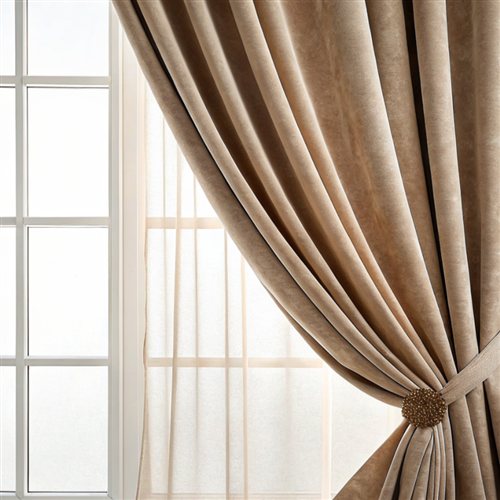 Beige
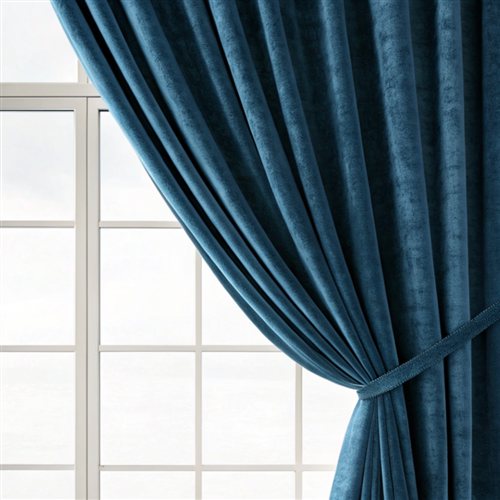 Blue
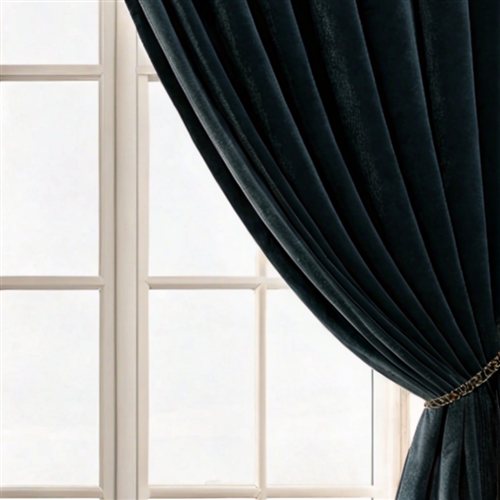 Deep navy
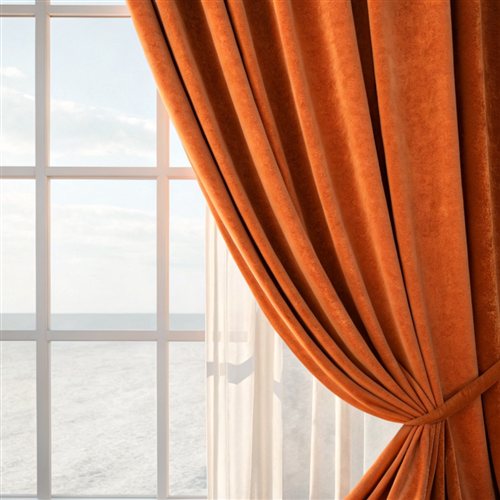 Orange
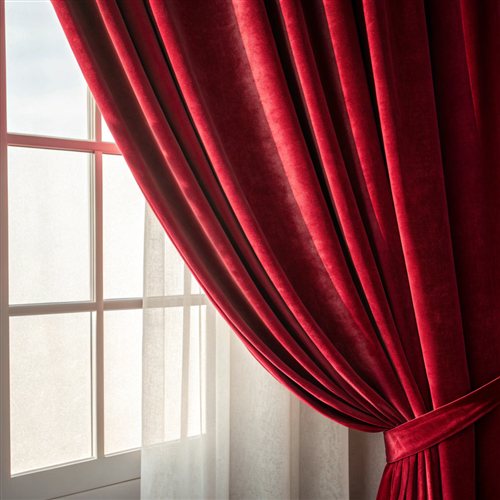 Red
Fabric families carry color differently, and the undertone question trips up more orders than any measurement. Linen's natural slubs mute and warm every dye — a "white" linen reads ivory-adjacent in most light, which is usually what people actually wanted. Sheers go the other way: against a bright window they read lighter and cooler than the swatch in your hand, so if you're between two sheer whites, take the warmer one. Velvet is the wildcard — its pile catches light directionally, so a single emerald panel shows three or four distinct greens from different angles and times of day, which is exactly its charm and exactly why it must be swatched in your room, not judged from a product photo. Rule of thumb across all five: match undertone (warm with warm) to the room's largest fixed surfaces — floors and large furniture — not to the wall paint, which is the cheapest thing in the room to change.
Decide in three questions
- Does anyone sleep in this room? Yes → blackout fabric, or your preferred fabric + blackout lining.
- Is daylight the room's best feature? Yes → sheer, semi-sheer, or unlined linen. Layer a drape over it if the room is also used at night.
- Is the room cold, echoey, or formal? Yes → velvet, lined.
Everything else — color, header, exact dimensions — follows from that first call, and swatches settle the color question better than any screen. Still torn between two? Our design service will look at a photo of the room and give you a straight recommendation, no charge.
Frequently Asked Questions
What is the best fabric for living room curtains?
Linen is the safest excellent choice for living rooms: it filters daylight into a soft glow, drapes well at custom lengths, and reads relaxed or formal depending on the header style. If your living room doubles as a TV room, pair linen with a white (privacy) lining, or layer a sheer behind a heavier drape so you can tune the light through the day.
Do blackout curtains really block all light?
A true blackout fabric or blackout lining blocks the light coming through the fabric itself, but some light will still leak around the edges of the panel. To get close to total darkness, mount the rod wider and higher than the frame, choose generous fullness, and consider a wraparound rod that lets the fabric return to the wall at each end.
Are velvet curtains hard to maintain?
Less than their reputation suggests. Modern velvets need a monthly once-over with a soft brush or upholstery vacuum attachment and prompt attention to spills — blot, never rub. They don't need frequent washing; overwashing is actually the faster way to ruin the pile.
What curtain fabric is best for insulation?
Velvet is the warmest single fabric thanks to its dense pile, and any fabric gains meaningful insulation from a blackout or thermal lining. For cold climates, velvet with blackout lining over a wide-mounted rod creates a still-air pocket that measurably cuts drafts from single-glazed windows.
Is polyester or natural fabric better for curtains?
Neither is universally better. Naturals like linen breathe, age beautifully, and drape with more character; quality synthetics resist fading and wrinkles and often cost less. What matters more is certification and construction — all Jenua fabrics are Oeko-Tex® certified, meaning they're tested free of harmful substances regardless of fiber.
Keep Exploring
- Linen CurtainsBreathable, softly textured linen that filters light beautifully and drapes with ease.
- Sheer CurtainsAiry sheers that soften sunlight and give rooms a light, layered feel.
- Velvet CurtainsRich, weighty velvet that insulates, quiets a room, and reads unmistakably luxe.
- White Linen Curtains, Made to Measure
- White Sheer Curtains, Made to Measure
- Emerald Velvet Curtains, Made to Measure
- Layering Curtains: Style Meets FunctionHow to layer sheers with drapes — double rods, fabric pairings, and light contro…
- Curtains vs. Drapes vs. BlindsAn honest comparison of curtains, drapes, blinds, and shades — cost, light contr…