
Curtain Care & Maintenance: Washing, Steaming & Keeping Colors True
Fabric-by-fabric care for linen, sheer, blackout, and velvet curtains — washing rules, wrinkle removal, sun-fade prevention, and a realistic schedule.
By The Jenua Workroom · Updated June 15, 2026 · 6 min read
Good curtains are a decade-long purchase, and the difference between panels that look better with age and panels that look tired at year three is mostly a handful of habits — none of them time-consuming, most of them about not doing things. Here's the full care picture for the four fabrics we sew, plus the schedule we actually recommend.



The universal rules
- Dust is the enemy; washing is the last resort. Dust dulls color and abrades fiber every time fabric moves. A monthly pass with a vacuum brush attachment (low suction, top to bottom) or a firm shake-out extends the time between washes — and every avoided wash extends the fabric's life.
- Remove hardware before any wash. Hooks and rings shred fabric in a drum. Grommets stay in, but zip the panel into a mesh laundry bag or pillowcase so the metal doesn't batter the machine — or the machine the metal.
- Cold, gentle, undercrowded. One or two panels per load. Curtain panels are large; a stuffed drum grinds fabric against itself, which is where most "washing damage" actually comes from.
- Never tumble-dry hot. Heat sets wrinkles in linen, shrinks loose weaves, and cracks blackout coatings. Hang panels back on the rod slightly damp and let their own weight do the pressing — the oldest workroom trick there is.
Linen
Machine wash cold on gentle, hang to dry (ideally on the rod), and expect — welcome — a relaxed, lived-in surface rather than a pressed one. That texture is the point of linen.
- Wrinkles: steam hanging panels; stop while a soft crease remains. Iron only if you must, on low, while the fabric is still damp.
- Stains: blot fresh spills, then cold water and a drop of mild dish soap on a cloth, working from the stain's edge inward. Avoid chlorine bleach ever; it yellows and weakens flax fiber.
- What ages linen prematurely: hot water, hot dryers, and enthusiastic ironing. The fiber itself gets softer and better with every gentle year.
Sheers
The easiest keep in the house — and the one that shows neglect fastest, because grime on a translucent fabric reads as gray light.
- Wash cold and gentle two or three times a year; they're light and dry in an hour or two back on the rod.
- Grayness that survives a normal wash usually lifts with an hour's pre-soak in plain cold water with a scoop of oxygen (not chlorine) bleach.
- Steam rather than iron — sheer fibers glaze under a too-hot plate, and a glazed patch is permanent.
Blackout
Treat the coating as the thing you're protecting: it's what makes the curtain work.
- Default to spot-cleaning — damp cloth, mild soap, done. The room-facing side is what gets dusty; the coating side mostly needs nothing.
- Machine wash only if the label allows (our blackout fabric does): cold, gentle, and absolutely no hot tumble-dry — heat is what delaminates and cracks coatings.
- Fold-creases from shipping release on their own within a week of hanging, faster with gentle steam from the fabric side, keeping the steamer moving.
Velvet
Velvet's reputation for fussiness comes from people treating it like flat fabric. It isn't — it's a pile, and pile care is different, not harder.
- Routine: a monthly once-over with a soft brush or upholstery attachment, brushing with the nap. That's 90% of velvet care.
- Spills: blot immediately — never rub, which grinds the liquid into the pile and flattens it. Lift residue with a barely-damp cloth and let it dry untouched.
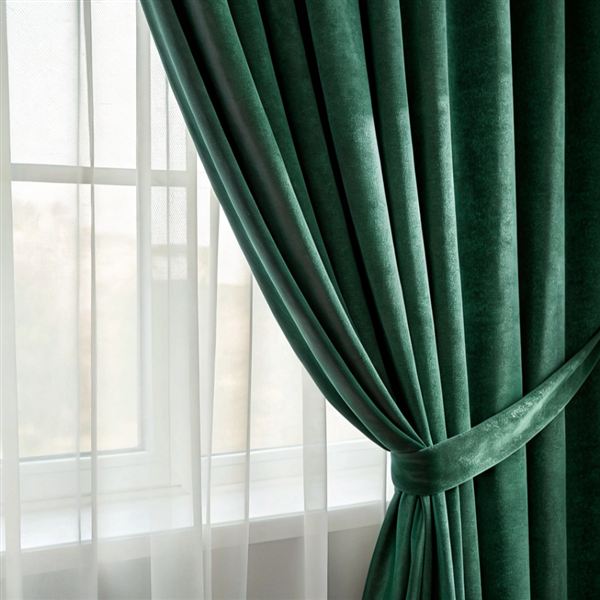
- Crushed patches (from a tieback, a chair back, a cat): hover steam over the area without touching, then brush the pile upright. Repeat rather than press harder.
- No machines, full stop. A washing machine mats pile permanently. If a velvet panel ever needs more than the above, that's the one legitimate call for a dry cleaner — name the fiber content when you drop it off.
Sun-fade: the slow leak
Fading isn't a cleaning problem, but it's the #1 thing that ends curtains early on south- and west-facing windows. Two real defenses:
- Rotation. On multi-window walls, swap panel positions once a year so exposure evens out — the same logic as rotating a mattress.
- Color strategy. Midtones and naturals weather sun more gracefully than saturated darks, which show fade soonest. If you want emerald velvet on a south wall, accept a slower, gentler version of the same physics. (Fabric choice trade-offs live in the fabric guide.)
Storage and moving
Panels come down for repainting, moving, or seasonal swaps, and most storage damage is preventable:
- Wash or vacuum first. Stored dirt sets; stored dust invites moths to natural fibers.
- Fold along the existing pleats or waves, largest possible folds, and store flat — a pillowcase or cotton zip bag on a closet shelf beats any plastic bin. Plastic traps humidity; natural fibers need to breathe.
- Never store long-term hanging in a garment bag in a damp basement or hot attic. Temperature swings do more harm than the folding you were trying to avoid.
- On rehanging, expect fold lines for a few days; a light steam accelerates the recovery. Velvet gets a nap-brush after unpacking, always.
Odors, smoke, and hard-water spots
Fabric holds a room's history. Cooking and smoke odors lift from machine-washable fabrics with a normal cold wash plus a half-cup of baking soda in the drum; for velvet, fresh air does more than any product — a breezy afternoon hung outside, out of direct sun, resets the pile's smell without touching its structure. Hard-water spotting (from enthusiastic plant misting or a window left open in the rain) shows worst on dark fabrics; a cloth dampened with distilled water, blotted along the spot's edge, avoids the ring that tap water leaves behind.
When to stop maintaining and start replacing
Honest care advice includes the end of the road. Sun rot — fabric that tears like paper along the leading edge — can't be cleaned or repaired; it's cumulative UV damage, and it means the panel gave you its years. Fade that bothers you every time you close the panels won't improve. When you do reorder, the measurements on your previous order confirmation are a head start — one advantage of made-to-measure the second time around.
A realistic schedule
| Cadence | Task | Time |
|---|---|---|
| Monthly | Vacuum-brush or shake out each panel | 2 min / panel |
| Quarterly | Steam visible wrinkles; brush velvet thoroughly | 10 min / room |
| Twice a year | Machine-washables: cold gentle wash, rehang damp | one morning |
| Yearly | Rotate panels on sunny walls; check hooks, rings, hem lines | 15 min / room |
That's the whole regime — under an hour a season for most homes. Skip everything else you've read: fabric-softener tricks, dryer-sheet hacks, and "refresh sprays" all leave residues that attract the dust you're trying to avoid.
One last honest note: if a panel is damaged rather than dirty — a torn header, a failed hem — cleaning advice won't help, and depending on the cause, our remake guarantee might. Write to us before writing the panel off.
Frequently Asked Questions
Can you machine wash curtains?
Most linen, sheer, and blackout-fabric curtains machine wash on a cold, gentle cycle — remove hooks and hardware first and wash panels one or two at a time. Velvet should not go in a machine; brush or vacuum it instead.
How often should curtains be washed?
Less than you'd think: a full wash once or twice a year is plenty for most rooms, supported by a monthly shake-out or vacuum pass with the brush attachment. Kitchens and smokers' homes need more; formal rooms with stationary panels need less. Overwashing wears fabric faster than dust does.
How do you get wrinkles out of curtains without taking them down?
A handheld garment steamer, top to bottom, while the panels hang. Work in vertical strokes an inch or two from the fabric, and smooth with your free hand. For linen, stopping while a hint of relaxed texture remains looks better than pressing it flat.
Do curtains fade in the sun, and can you prevent it?
Any dyed textile fades under enough direct sun. Slow it dramatically by rotating panels annually on multi-window walls, and favoring naturally fade-resilient midtones on brutal south-facing exposures.
How do you clean blackout curtains without ruining the coating?
Spot-clean coated blackout fabric with a damp cloth and mild soap; machine-wash only if the care label allows, cold and gentle, and never tumble-dry hot — heat is what cracks a blackout coating. Hang to dry, and the panel's own weight pulls it smooth.
Keep Exploring
- Linen CurtainsBreathable, softly textured linen that filters light beautifully and drapes with ease.
- Velvet CurtainsRich, weighty velvet that insulates, quiets a room, and reads unmistakably luxe.
- White Linen Curtains, Made to Measure
- Emerald Velvet Curtains, Made to Measure
- Layering Curtains: Style Meets FunctionHow to layer sheers with drapes — double rods, fabric pairings, and light contro…
- Curtains vs. Drapes vs. BlindsAn honest comparison of curtains, drapes, blinds, and shades — cost, light contr…
- Curtain Hanging Styles: Height, Width & Hardware Done RightWhere to mount the rod, how far to extend it, inside vs. outside mounts, and the…